I have used both the Steinberg UR12 and UR22mkII as part of my audio setup. You can also see how they fit into part of my SFXVault production setup. Neither is a new product anymore, and both have now been discontinued, but they are still useful examples of what made Steinberg’s older entry-level and compact interfaces so easy to recommend.
My impression of both units is simple: they offered a lot of the basic functionality most people actually needed without becoming expensive or complicated. If you were starting DTM, recording at home, or streaming from a PC, they were very practical interfaces.
UR12: A Very Good Entry Point
The UR12 was the kind of interface I could easily recommend to a beginner. It was an affordable entry model, but it already covered the fundamentals: microphone input, instrument input, headphone monitoring, direct monitoring, and support for high-resolution audio up to 24-bit / 192 kHz.
One feature that made it particularly useful outside ordinary music production was loopback. That made the UR12 practical for live streaming because microphone or instrument input could be mixed with audio coming from software on the computer and sent back to streaming software. Steinberg itself promoted the UR12 for both music production and internet streaming.
From my own use, that combination was what made the UR12 such good value. It did not try to be a large studio interface. Instead, it gave a beginner enough of the basics to start DTM while also being useful for streaming and everyday audio work.
The UR12 has now been discontinued. Steinberg still maintains its product information, but if you want this exact model today, the realistic route is the used market. That also changes the value calculation: it was an excellent low-cost choice when new, but a used unit should be judged by its condition, price, and whether its older USB-based workflow fits your current system.
UR22mkII: More Flexible, but Familiar
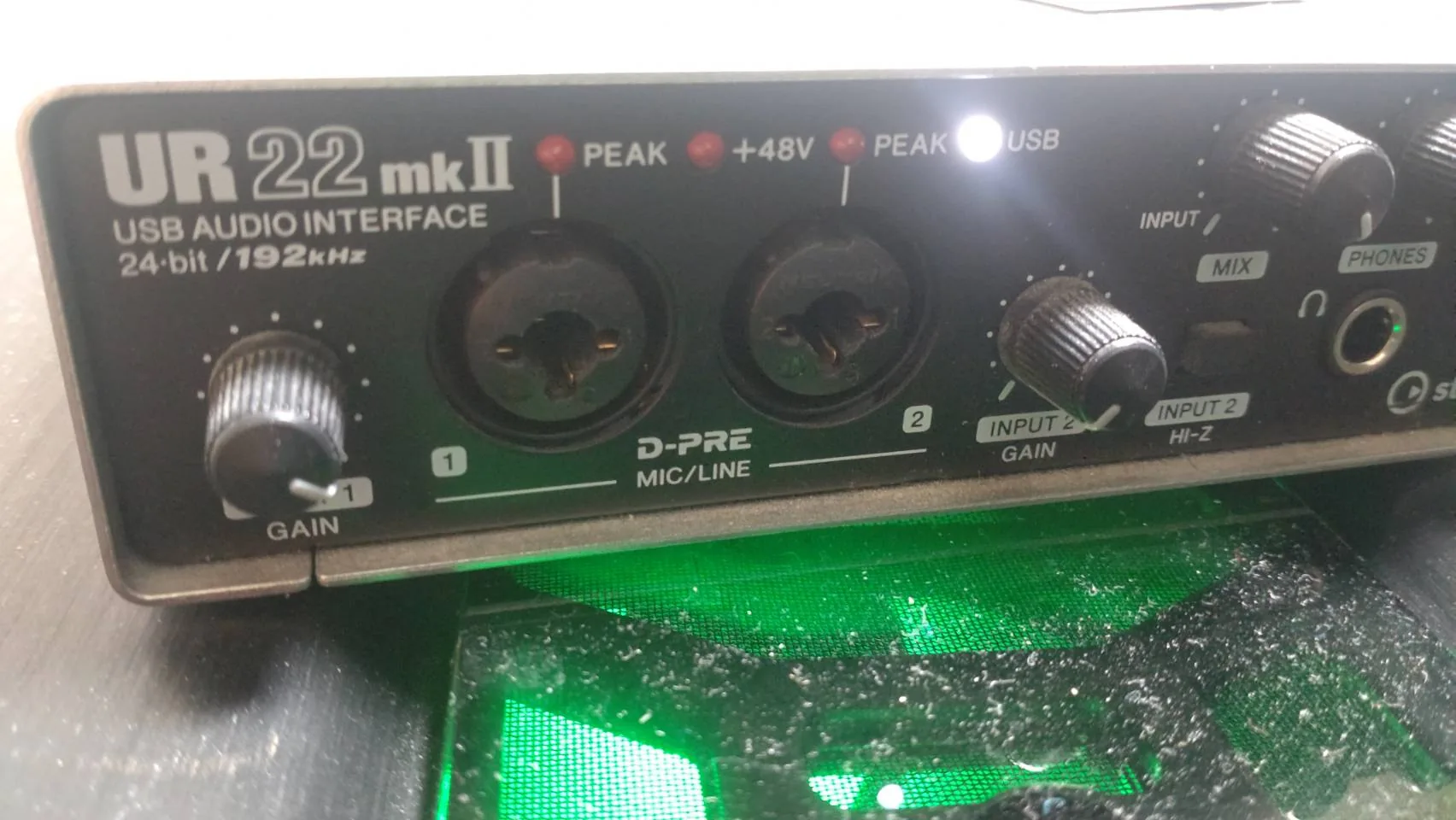
My impression of the UR22mkII is that it feels like an extension of the same basic idea rather than a completely different class of interface. Compared with the UR12, there are more connection options and more flexibility, but the overall character is still straightforward and practical.
The UR22mkII provides two D-PRE microphone preamps, two combo inputs, MIDI input and output, 24-bit / 192 kHz audio, direct monitoring, and loopback support. For someone who wanted a little more room than the UR12 without moving to a much larger interface, that was a useful step up.
The cost-performance ratio was still one of its strongest points. For a long time, it was the sort of interface where my advice could simply be: if you are not sure what to buy, this is a safe choice. It covered enough situations that a beginner could start with it and continue using it after gaining more experience.
A Natural Match for Cubase, but Not Only for Cubase
If you use Cubase, the UR series feels like an obvious pairing because Steinberg made both the hardware and the DAW ecosystem around it. In my own environment, that makes the UR12 and UR22mkII feel like very conventional choices for DTM.
But I would not describe them as interfaces only for Cubase users. Their loopback capability also made them useful for streaming, and they can handle the ordinary monitoring side of audio work as well. You can connect monitor speakers and monitor headphones, so for music production, editing, streaming, and general sound-related work, they provided enough functionality for many users. For more context on the hardware around that workflow, see some of the recording gear I use for SFXVault.
Which One Did I Prefer?
The UR12 impressed me because of how much it offered at the entry level. For a beginner starting DTM or somebody who mainly wanted a solid interface for streaming, its simplicity was a strength.
The UR22mkII gave me somewhat more flexibility, but it did not feel like a dramatic change in philosophy. It was still affordable, still easy to understand, and still capable enough that I could recommend it without having to explain a long list of compromises.
Both models are discontinued now, so I would not automatically tell somebody in 2026 to search for one instead of looking at current interfaces. But as products I actually used, I still think they were very well balanced. They gave beginners the essentials, worked well with Cubase, were useful for streaming, and had enough monitoring capability for serious everyday audio work.