Sound effects start with recording. Before editing, cleanup, layering, or exporting anything for SFXVault, I need a way to capture the original sound in the first place. This is a look at some of the recording gear I currently keep on hand.
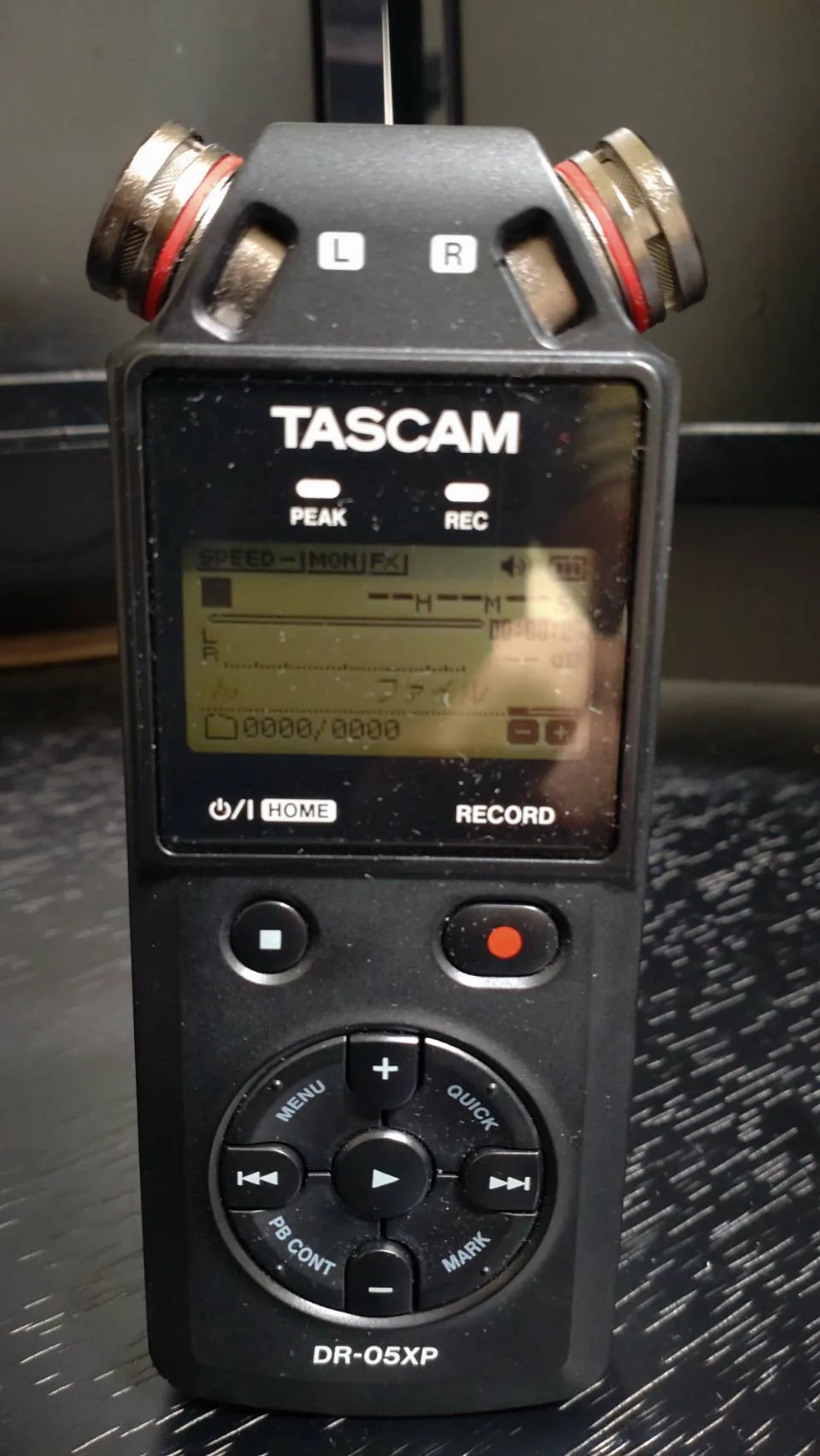
TASCAM DR-05XP
One of the portable recorders I use is the TASCAM DR-05XP. I am very satisfied with it overall. The sound quality is excellent for a compact recorder, and it can record high-resolution WAV audio up to 96 kHz, including 32-bit float. For capturing source material that I may later process heavily, having that recording capability is useful.
The difficult part is getting the settings right for the sound I am actually recording. Different targets and environments need different adjustments, and I have found that part surprisingly difficult. The recorder itself is capable of very good results, but getting those results consistently takes practice. It is the kind of tool that becomes much more useful once you become familiar with how it reacts to different recording situations.
The built-in left and right microphones also make it possible to capture a stereo image without setting up separate microphones. Depending on the recording, I then take the source material back to the workstation for editing in Cubase, SpectraLayers, Audacity, or other tools.
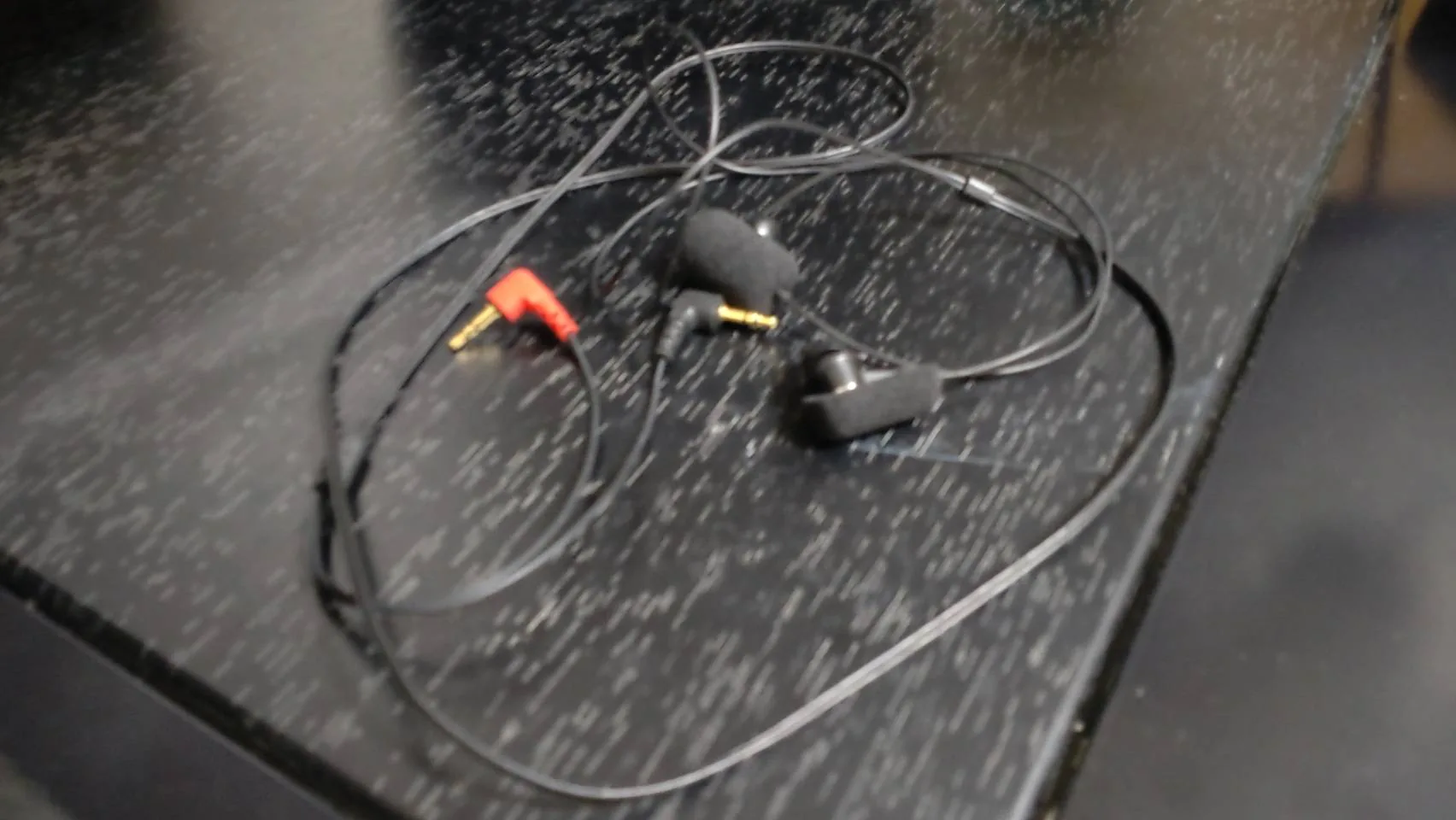
CS-10EM Binaural Recording Setup
For binaural recording, I use CS-10EM earphone-style microphones. Considering their relatively low price, I think the sound quality is good. They can be worn directly on the ears, which makes it possible to record from a listener-like position without a large microphone setup.
The practical problem is that wearing them also means the microphones are close to your own body. Keeping breathing noise out of a quiet recording can be difficult. In my experience, windscreens are essential as well. Without them, wind and air movement can make the microphones far less useful than they should be.
SCENES Lifelike
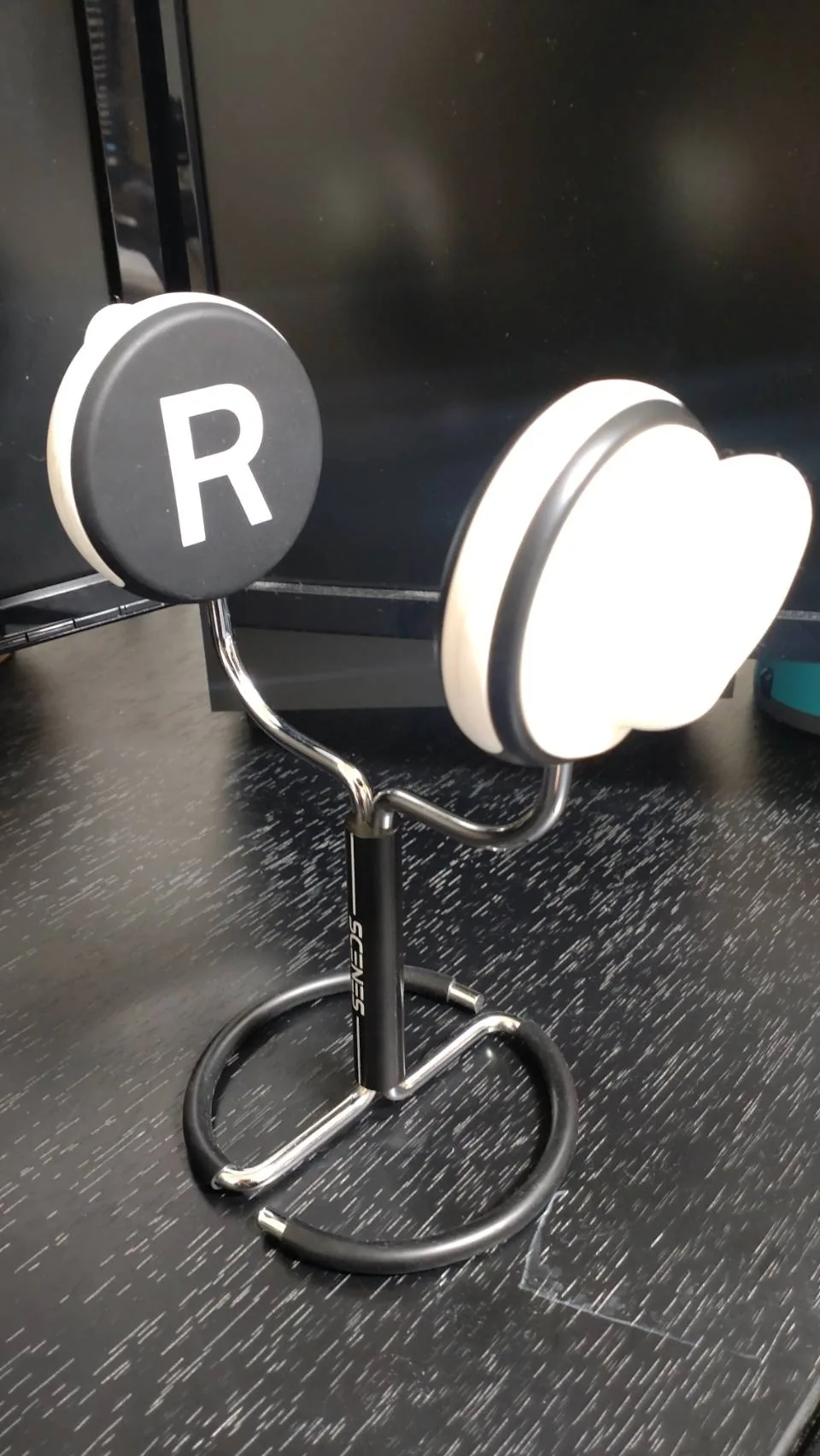
I also use a SCENES Lifelike earphone stand with the CS-10EM. Although it is an earphone stand, for ASMR-style binaural recording I consider it almost essential. It gives the microphones fixed left and right ear positions, so I can record without wearing the CS-10EM myself and without introducing my own breathing into the same position as the microphones.
There is one weakness I learned about the hard way. The resin parts surrounding the silicone ear sections are fragile. If the stand is dropped or knocked against something, they can crack. Mine has cracked too.
I also learned not to repair that area with cyanoacrylate instant glue. When I tried it, the material was attacked and appeared to melt. Afterward I looked into why that might have happened. Henkel notes that uncured cyanoacrylate can cause stress cracking in some plastics, including polycarbonate and acrylic. I do not know the exact resin used in this part of the SCENES Lifelike, so I cannot say that this was definitely the mechanism in my case, but it may explain what I saw. For my repair, an ordinary general-purpose adhesive was the better choice. (Henkel: Cyanoacrylates FAQ)
I do not use every microphone or recorder for every type of sound. The recording method depends on the source, distance, environment, and what I plan to do with the material afterward.
Recording Is Only the First Stage
For SFXVault, recording is the beginning of the workflow rather than the finished product. The raw material may need trimming, noise cleanup, level adjustment, spectral editing, layering, variation creation, or format conversion before it becomes part of a sound effects pack.
That is also why I keep both portable recording gear and a larger desktop production environment. The portable equipment captures the source; the workstation gives me the tools and storage to turn those recordings into organized assets. For a broader look at that environment, see part of my SFXVault production setup.
More Recording Gear Later
This is only part of the equipment I use. I will cover more microphones, recording methods, and practical examples as I document more of the SFXVault production process.